Search This Blog

Showing posts with label abortion. Show all posts

Saturday, January 4, 2025

Making Sense of God’s Covenant with Noah

Making Sense of God’s Covenant with Noah

Background

The Noahic Covenant, found in Genesis 9:8-17, is the promise that God made to Noah and his descendants after the flood that He would never again destroy the earth by water and would preserve it through to Christ’s Coming. The Noahic Covenant has several distinguishing features. First, it is an unconditional covenant. Second, it was made to Noah and all his descendants as well as “every living creature” and the earth in general (Genesis 9:8-10). This means that it is a Covenant made to all humanity, not just Israel, nor the Church. Third, it was sealed with a sign, the rainbow, as a perpetual reminder of this gracious (gracious because it is unconditional) promise.

Alister Wilson and James A. Grant remind us that “the idea of covenant is fundamental to the Bible’s story. At its most basic, covenant presents God’s desire to enter into relationship with men and women created in his image ... Covenant is all about relationship between the Creator and his creation.” [The God of Covenant]. Daniel C. Lane would add that it is made under oath, “under threat of divine curse.” [The Mean and Use of the Old Testament Term Covenant].

Important to our topic of the The Noahic Covenant, Peter Gentry [Kingdom Through Covenant] has highlighted the crucial difference between “creating a covenant” (karat berit) and “renewing/establishing a covenant previously created” (heqim berit). Why is that important? It is because heqim berit is the only phrase used in the Covenant with Noah. This is important because it implies that the Noahic Covenant is not new but in fact a re-affirmation of an earlier Covenant, namely the Creation Covenant or named by some, The Adamic Covenant. The only difference is that the Covenant with Adam involved an innocent person. The Covenant with Noah is with sinful humankind.

As noted previously the Noahic Covenant is made unilaterally or unconditionally. The context of a sinful humanity in a curse world cannot thwart the promise of God. Peter Gentry also makes the case that when the term Covenant is used it should be viewed as the other side of the word Torah. The Torah is the instruction given within the Covenant. Gentry likens it to “faith” and “repentance” which are two-sides of the same coin. This is critical to understanding the Noahic Covenant, for there is both the Covenant stated and the instructions within the Covenant that form the whole. So we see this in the Noahic Covenant. It includes the Promise (the Covenant) and the Torah (instructions or stewardship of the Covenant).

Examining the Scripture passage the following structural diagram tries to portray the Author’s intent.


Summary


The Covenant Promise: God will preserve the world until the Coming of Christ (2 Peter 3:10). 

The Covenant Torah (Instruction): God gave Noah and all future descendants stewardship over the world, including caring for it, cultivating it, and eating animals without fear of punishment. And secondly, He gave all humanity the responsibility of preserving life. All humankind is to be “pro life.”

The Covenant Sign: The sign of the covenant was the rainbow, which God set in the clouds. God said, “When the bow is in the clouds, I will see it and remember the gracious and kind Covenant” (Genesis 9:16). 


The New Testament picks up this expression, often referred to as “common grace.”  In Matthew 5:45b we hear these words of Jesus: “for he makes his sun rise on the evil and on the good, and sends rain on the just and on the unjust.”  What Promise is behind this grace of God? “Neither will I ever again strike down every living creature as I have done. While the earth remains, seedtime and harvest, cold and heat, summer and winter, day and night, shall not cease.” (Genesis 8:21-22)


Implications


In the Noahic Covenant made with all humanity, regardless of moral character, religion or nationality, God promises to preserve the earth as long as it remains (or better: until Christ comes). This has incredible implications to current discussions on climate and the environment. Lest one become callous and seek to avoid any responsibility in that topic we are reminded that in this Covenant we are instructed to be stewards of creation.


Another aspect to the instructions within the Covenant includes the preservation of life. Current debates on abortion, euthanasia, voluntary suicide (MAID), etc., are assumed under this Covenant. I believe the concept of the value of human life also includes discussion on race, culture, and social status, etc. All humans bear God’s image and express equal value. The topic becomes huge when you consider categories such as medical/health care, self-defence and so on.


Lastly, God makes a covenant of grace to sinful humanity. The same holy and righteous God that created the world, established the Creation Covenant, re-affirms this Covenant. The experience of the Flood underscores His justice and wrath. Yet for a time He withholds His judgment and permits sinful man to enjoy both “the sunshine and the rain.”  But this is for a time. The Apostle Peter writes, “But the day of the Lord will come like a thief, and then the heavens will pass away with a roar, and the heavenly bodies will be burned up and dissolved, and the earth and the works that are done on it will be exposed” (2 Peter 3:10).


As God did in the Flood, so too He does as the world expects the pending wrath of God — He offers a way of escape. Again, we hear Peter, “The Lord is not slow to fulfill his promise as some count slowness, but is patient toward you, not wishing that any should perish, but that all should reach repentance” (2 Peter 3:9). Do not take advantage of this period of Common Grace, this period of the Noahic Covenant. There is judgment coming but “God so loved the world, that he gave his only Son, that whoever believes in him should not perish but have eternal life,” Jesus (John 3:16).


Sunday, August 7, 2022

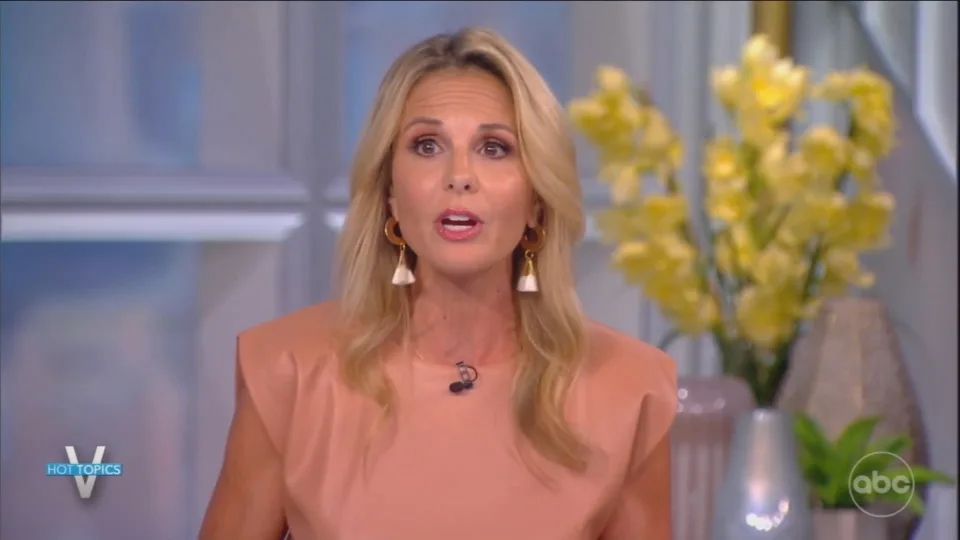
The headline read: Elisabeth Hasselbeck returns to 'The View' and debates abortion with Whoopi Goldberg and Joy Behar. Admittedly I don’t know anything about these ladies.  The name Whoopi Goldberg is familiar, and I have heard about this show called “The View”.  My comments therefore are not grounded in a lot of knowledge or backstory.  The article showed up in my Google news feed and it was the title that grabbed my attention.  I can’t write about anything beyond what is in the article.

Apparently, Elisabeth Hasselbeck, was a previous co-host and returned to the Show and the topic of the Kansas’ debate on whether to keep pro abortion rights in light of the recent dismantling of the Roe vs Wade decision by the US Supreme Court.

If the reporting is accurate, the author, Suzy Byrne, wrote: “Using religion in her response, Goldberg said, "As you know, God doesn't make mistakes. God made us smart enough to know when it wasn't going to work for us. That's the beauty of giving us freedom of choice."”

I have no desire to defame Hasselbeck.  In fact, I admire her courage and I applaud her use of adoption as an alternative to abortion.  My focus is on the phrase, “Using religion in her response.” My point is that although religion could be a response to the abortion debate, it is not the best nor is it the necessary response.  Prolife is not simply a religious conviction.

Scott Klusendorf writes, “The abortion controversy is not a debate between those who are pro-choice and those who are anti-choice. It’s not about privacy. It’s not about trusting women to decide. It’s not about forcing one’s morality. It’s about one question that trumps all others.”[1]

The question is, Is the unborn a human being or not?  That is not a religious question.  At its core that is a scientific question. I don’t think there is any reason to debate the issue with someone who admits the unborn to be human and is willing to take its life.  One would hope that this approach is fundamentally wrong on any level. So the real debate between so-called pro-choice and so-called pro-life is WHAT IS THE UNBORN?

Klussendorf has written a very compelling book entitled The Case for Life.  I think someone seriously committed to do what is morally right ought to read his book. It argues extensively, this point:

“The science of embryology is clear. From the earliest stages of development, the unborn are distinct, living, and whole human beings. Therefore, every “successful” abortion ends the life of a living human being.”[2]

“Leading embryology textbooks affirm this. Keith Moore and T. V. N. Persaud, in The Developing Human: Clinically Oriented Embryology, a widely used embryology text, write that “human development begins at fertilization when a male gamete or sperm (spermatozoon) unites with a female gamete or oocyte (ovum) to form a single cell— a zygote. This highly specialized, totipotent cell marked the beginning of each of us as a unique individual.”[3]

He goes on to quote T.W. Sdler’s Langman’s Embryology text that affirms that human life begins at fertilization.  He points the reader to a 1981, a U.S. Senate judiciary subcommittee that heard expert testimony on when human life begins. Professor Micheline Matthews-Roth of Harvard University Medical School told the subcommittee, “It is incorrect to say that biological data cannot be decisive. . . . It is scientifically correct to say that an individual human life begins at conception.” Other expert citations are offered by Klussendorf and are important sources for the reader to examine.

“Embryology textbooks uniformly state that new human life comes into existence upon completion of fertilization.” [4] The scientific, embryonic research supports the conclusion that life begins at conception and human beings didn’t come from a fetus but are fetuses. So, the question of enquiry is clear: what is the unborn.  The scientific (not religious) response is that the unborn at every stage are human – not mature, but a complete, whole human being in its essence.   

“From conception onward, the human embryo is fully programmed, and has the active disposition, to develop himself or herself to the next mature stage of a human being,”[5] write Robert George and Patrick Lee.

So, as much as I admire and in principle will agree with Elisabeth Hasselbeck’s argument on The View, the pro-life position is not founded on religion, but on science.  “Pro-lifers don’t look to theology to tell them these things but to the science of embryology.”[6]  Where religion comes into the discussion is what follows when one has properly heard the science.  My question is, by what code of ethics or morality is it right to kill a defenseless human being without justification?  This is where Hasselbeck is correct. “"I believe our Creator assigns value to life, and that those lives have plan and purpose over them as designed by God that are not limited to the circumstances of conception, nor the situations they're born into."

If someone properly answers the question, “What is the unborn”, the morality is clear.  And this is where Hasselbeck’s solution is totally appropriate: adoption is a better pro-choice argument.


[1] Scott Klusendorf. The Case for Life: Equipping Christians to Engage the Culture (Kindle Locations 201-203). Kindle Edition.

[2] Ibid, (Kindle Locations 555-557).

[3] Ibid, (Kindle Locations 565-568).

[4] Ibid,(Kindle Location 863).

[5] Robert P. George and Patrick Lee, “Acorns and Embryos,” The New Atlantis, No. 7, Fall 2004/ Winter 2005, 90-100; http:// www.thenewatlantis.com/ publications/ acorns-and-embryos.

[6] Scott Klusendorf. The Case for Life: Equipping Christians to Engage the Culture (Kindle Locations 856-857). Kindle Edition.